
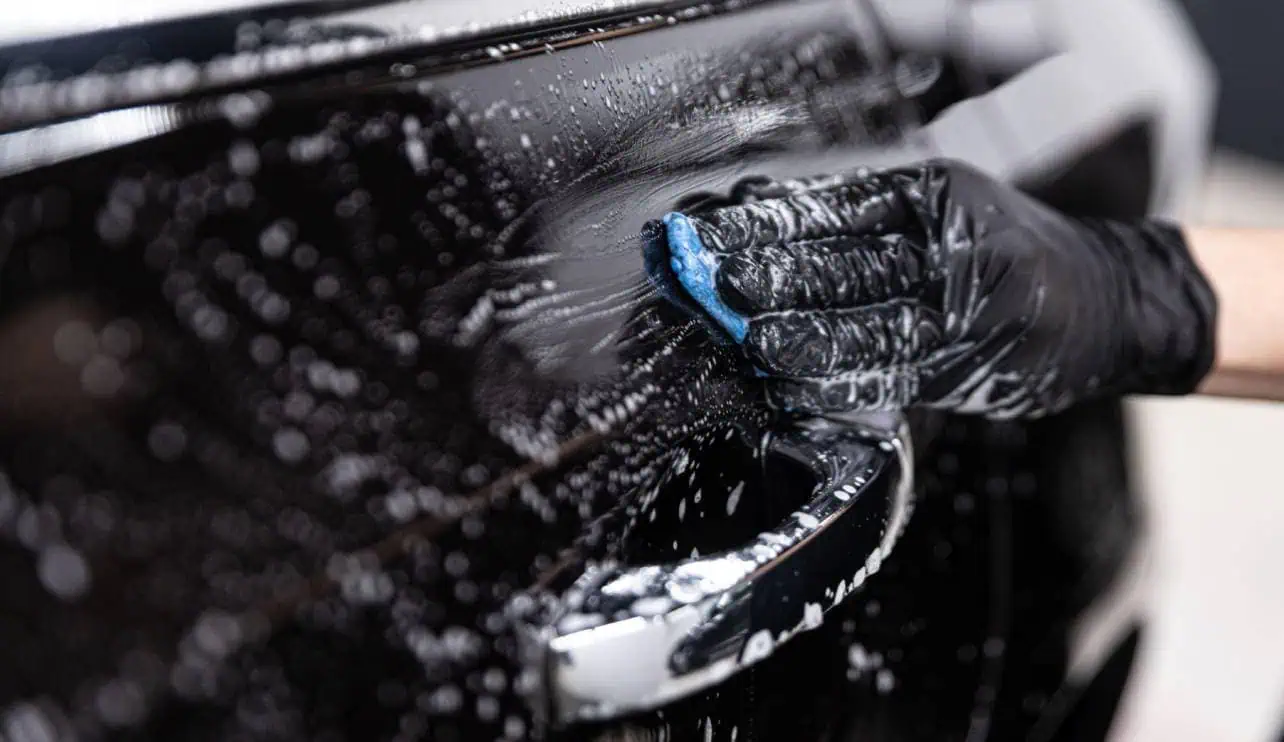
Most vehicle owners believe their paint is clean after a regular wash—but that’s often far from reality.
Even after washing, your vehicle’s surface can still hold embedded contamination like industrial fallout, brake dust, road grime, tree sap residue, and microscopic metal particles.
When mechanical decontamination is skipped, these contaminants remain bonded to the paint and slowly continue damaging the surface over time.
The result? Reduced gloss, rough paint texture, premature paint wear, micro-scratching, and protection products that fail far sooner than they should.
In this guide, we’ll explain exactly what happens when paint decontamination is ignored—and why professional mechanical decontamination plays a critical role in preserving your vehicle’s finish.
A regular wash removes loose dirt and surface debris, but it does not remove bonded contamination attached to the paint.
Common contaminants left behind include:
• Brake dust particles
• Industrial fallout
• Rail dust and metal particles
• Tree sap residue
• Road tar and grime
• Hard water mineral deposits
These contaminants become embedded into the clear coat and create a rough, gritty surface that basic washing cannot safely remove.
Why it matters: The longer contamination sits on the paint, the more it increases surface deterioration and reduces overall paint clarity.
According to automotive clay bar decontamination methods, bonded contaminants such as industrial fallout, brake dust, and rail dust can remain embedded in vehicle paint even after washing, requiring mechanical decontamination to properly cleanse the surface.
When contamination remains embedded in the surface, it continuously interacts with your paint every time the vehicle is exposed to heat, moisture, or washing.
Over time, this can lead to:
• Oxidation and dullness
• Clear coat weakening
• Water spotting
• Embedded rust specks
• Premature paint aging
• Loss of gloss and depth
Many vehicle owners notice their paint looking faded or feeling rough without realizing contamination buildup is often the cause.
Why it matters: Ignoring bonded contamination allows damage to compound gradually, making paint correction more difficult and expensive later.
One of the biggest hidden problems with skipping mechanical decontamination is increased paint scratching during normal washing.
When contaminants remain stuck in the paint, wash mitts and towels drag those particles across the surface repeatedly.
This commonly causes:
• Swirl marks
• Fine scratches
• Holograms
• Reduced paint clarity
• Loss of reflective shine
Professional exterior detailing helps safely remove contamination before it can continue damaging the finish during routine maintenance.
Why it matters: Paint damage often occurs during washing—not because of dirt alone, but because bonded contaminants are being rubbed against the surface.
Many people invest in waxes, sealants, or ceramic coatings without properly decontaminating the paint first.
If contamination remains trapped under protection layers, the surface cannot bond properly.
This can result in:
• Reduced coating durability
• Uneven gloss and finish
• Poor hydrophobic performance
• Surface imperfections becoming trapped
• Shortened protection lifespan
Proper preparation through services like ceramic coating preparation ensures the paint is fully cleansed before long-term protection is applied.
Why it matters: Even premium coatings cannot perform correctly on contaminated paint surfaces.
Mechanical decontamination safely removes bonded contaminants that chemical washing alone cannot eliminate.
This process typically involves specialized clay media or professional-grade decontamination tools designed to pull contamination from the paint surface safely.
The results are immediately noticeable:
• Smooth paint texture
• Improved gloss and reflection
• Cleaner surface for polishing
• Better coating adhesion
• Reduced risk of future scratching
When combined with drop off detailing, mechanical decontamination becomes part of a more complete paint restoration and protection process.
Why it matters: Decontamination creates the clean foundation required for proper correction, polishing, and long-term protection.
Vehicles that regularly undergo mechanical decontamination maintain their finish far better over time compared to vehicles that only receive basic washes.
Long-term benefits include:
• Better paint clarity and depth
• Reduced surface damage
• Longer-lasting ceramic coatings
• Easier maintenance washing
• Improved resale appearance
• Better overall paint preservation
Why it matters: Paint contamination is gradual, but so is the damage it creates. Proper decontamination helps stop that cycle before major correction becomes necessary.
Skipping mechanical decontamination may not cause immediate visible damage—but over time, it quietly destroys the smoothness, clarity, and longevity of your vehicle’s paint.
What many people mistake for “normal paint aging” is often years of embedded contamination slowly breaking down the surface.
Professional mechanical decontamination removes what regular washing leaves behind, creating a cleaner, safer, and better-prepared surface for polishing and long-term protection.
If you want your vehicle’s paint to maintain its gloss, smoothness, and protection for years—not just weeks—mechanical decontamination is not optional. It’s one of the most important steps in preserving your finish properly.